
LLM in Canada 2026: Universities, Fees, PR Pathway, NCA Eligibility & Student Visa Guide
LLM in Canada 2026 is becoming one of the most practical international pathways for Indian law graduates. Pursuing an LLM in Canada 2026 gives Indian students access to globally recognised universities, comparatively lower tuition fees than the USA, post-study work opportunities, and a realistic PR pathway. In addition, Canada offers a balance of quality legal education, moderate tuition fees, and long-term immigration opportunities that many other countries do not provide.
Moreover, an LLM in Canada can help Indian students build expertise in corporate law, business law, technology law, international law, human rights, and immigration law while studying at reputed Canadian universities.
However, before choosing Canada, you should understand tuition costs, NCA rules, licensing limitations, work opportunities, visa requirements, and whether the degree matches your long-term career plans.
This complete guide explains whether pursuing an LLM in Canada for 2026–2027 is worth it for Indian students. It also covers top universities, tuition fees, scholarships, the NCA process, Canada study permit rules, PR opportunities, and realistic career outcomes. If you are still comparing destinations, you can also explore our comprehensive LLM Abroad Guide for a broader comparison of Canada, USA, UK, Australia, and other popular study destinations.
Is LLM in Canada 2026 Worth It for Indian Law Graduates?
If you are comparing countries, LLM in Canada 2026 is usually the best choice for Indian students who want affordable tuition, post-study work rights, and a stronger long-term immigration pathway.
This is the most important question, and the answer depends largely on your career goals.
An LLM in Canada is generally worth it if your objective is:
- Building a legal career in Canada through the NCA route
- Gaining a post-study work permit and possible PR pathway
- Working in corporate, business, technology, immigration, or international law
- Studying at a reputed university with lower overall cost than the USA
- Improving your profile for law firms, multinational companies, NGOs, policy organisations, or academia
However, it may not be ideal if your priority is:
- A guaranteed law firm job in Canada immediately after graduation
- Direct eligibility to practise law without licensing requirements
- A very low-cost international degree
- Quick immigration without strong academic and work credentials
| Advantages | Considerations |
|---|---|
| Comparatively affordable tuition | NCA licensing process may be lengthy |
| PR-friendly immigration pathway | Law firm jobs remain competitive |
| Post-Graduation Work Permit (PGWP) | Licensing differs by province |
| Strong demand in business and compliance roles | Not every LLM leads directly to legal practice |
| One-year and two-year program options | Living costs can still be high in Toronto and Vancouver |
LLM in Canada – Quick Overview for Indian Students (2026 Intake)
Before applying, Indian students should understand the expected cost, duration, work opportunities, immigration route, and licensing framework.
Program Duration
1–2 Years
It’s depending on the university and whether the program includes coursework, thesis, or co-op.
Tuition Fees
CAD 18,000–55,000
Depending on the university, city, and specialisation.
Living Expenses
CAD 12,000–22,000 per year
Annually depending heavily on whether you study in Toronto, Vancouver, Ottawa, Calgary, or smaller cities.
Total Investment
Approx. ₹20–50 lakh
It’s including tuition, living, visa, insurance, and miscellaneous expenses.
Student Visa
Canada Study Permit
A Canada Study Permit is required for full-time international study.
Post-Study Work
PGWP up to 3 years
PR Possibility
Strong compared to USA/UK
Many Indian students choose Canada because a PGWP can later support Express Entry or provincial immigration.
Licensing Route
NCA + Provincial Bar Process
Top Universities for LLM in Canada (2026)
Indian students usually shortlist universities based on:
- Global reputation
- NCA compatibility
- Tuition fees
- Business and corporate law specialisations
- Scholarship availability
- Location and PR opportunities
| University | Approx Tuition (CAD) | Known For | NCA Friendly |
|---|---|---|---|
| University of Toronto Faculty of Law | 45,000–55,000 | Corporate, Business, International Law | Yes |
| Osgoode Hall Law School, York University | 30,000–42,000 | Business Law, Technology Law | Yes |
| McGill University Faculty of Law | 20,000–35,000 | International & Comparative Law | Yes |
| University of British Columbia (UBC) | 18,000–35,000 | Business, Environmental & Tech Law | Yes |
| University of Ottawa | 22,000–35,000 | Public Law, Human Rights, Technology Law | Yes |
| Queen’s University | 22,000–30,000 | Corporate and Commercial Law | Yes |
| University of Alberta | 18,000–28,000 | Energy, Natural Resources & Business Law | Yes |
| Dalhousie University | 20,000–30,000 | Marine, Business & Health Law | Yes |
Always verify the latest tuition fee and NCA compatibility directly from the official university website before applying.
Total Cost of LLM in Canada for Indian Students (2026)
Pursuing an LLM in Canada is usually more affordable than studying in the USA. Nevertheless, the total cost still depends on the university and city.
| Expense Category | Estimated Cost |
|---|---|
| Tuition Fees | CAD 18,000–55,000 |
| Living Expenses | CAD 12,000–22,000 |
| Health Insurance | CAD 600–1,200 |
| Visa + Biometrics | CAD 235–300 |
| Airfare & Initial Setup | CAD 1,000–3,000 |
| Miscellaneous Expenses | CAD 1,500–3,000 |
| Total Estimated Budget | CAD 35,000–75,000 |
Approximate Cost in Indian Rupees
- Lower-budget universities: ₹20–28 lakh
- Mid-range universities: ₹30–40 lakh
- Premium universities in Toronto/Vancouver: ₹45–50 lakh+
City-Wise Living Cost Comparison
| City | Approx Living Cost Per Year |
|---|---|
| Toronto | CAD 18,000–22,000 |
| Vancouver | CAD 18,000–22,000 |
| Ottawa | CAD 14,000–18,000 |
| Calgary | CAD 13,000–17,000 |
| Edmonton | CAD 12,000–16,000 |
| Halifax | CAD 12,000–15,000 |
Can Indian Lawyers Practise in Canada After LLM?
Yes, but an LLM alone does not automatically make you eligible to practise law in Canada.
Foreign-trained lawyers, including Indian LLB graduates, usually need to complete the NCA process before they can enter the licensing route in a Canadian province.
Basic Framework
Indian lawyers generally need to:
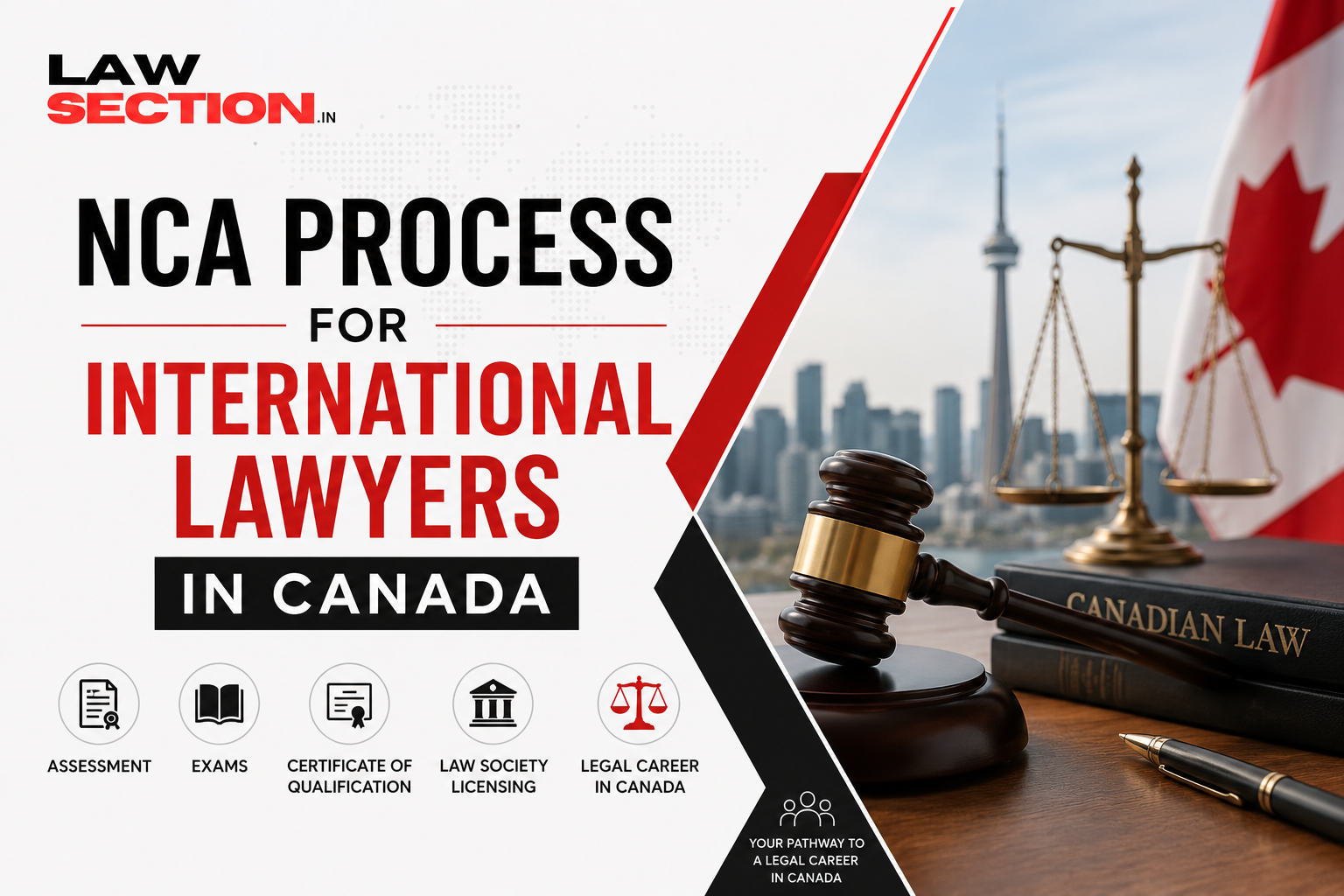
- Complete an LLB in India
- Apply for assessment through the National Committee on Accreditation (NCA)
- Receive a list of required subjects or exams
- Complete those subjects through an LLM or by clearing NCA examinations
- Apply to a provincial law society for licensing
- Complete articling and bar requirements where applicable
Important Reality Check
- An LLM may reduce the number of NCA exams in some cases
- However, not every Canadian LLM is designed specifically for NCA requirements
- Some universities offer special “Canadian Common Law” or “NCA-focused” LLM programs
- Ontario remains one of the most popular provinces because of its legal job market and large Indian student community
Common Universities Chosen for NCA-Focused LLM Programs
- Osgoode Hall Law School
- University of Toronto
- University of Ottawa
- University of British Columbia
- Queen’s University
Student Visa (Study Permit) & Work Opportunities After LLM in Canada
Understanding Canadian immigration rules is essential before choosing your university.
| Study Permit (Primary Route) | Post-Graduation Work Permit (PGWP) |
|---|---|
| Required for all full-time students | Available after completing an eligible program |
| Requires proof of tuition + living funds | May allow work in Canada for up to 3 years |
| Usually requires biometrics and medical exam | Can strengthen your PR profile |
| Allows limited work during study | Work experience can support Express Entry |
Study Permit Requirements
Most Indian students need:
- Letter of Acceptance from a Designated Learning Institution (DLI)
- Proof of funds
- Passport and academic documents
- Statement of Purpose
- Biometrics and sometimes a medical examination
Work While Studying
Students can usually:
- Work part-time during classes
- Work full-time during scheduled breaks
- Gain practical experience through internships or co-op where available
After Graduation
Depending on your program length, you may receive:
- 1-year PGWP after a 1-year program
- Up to 3-year PGWP after a 2-year eligible program
PR Pathway After LLM in Canada
One of the biggest reasons students prefer Canada over the USA or UK is the possibility of permanent residency.
After completing your LLM, you may become eligible for:
- Express Entry
- Canadian Experience Class (CEC)
- Provincial Nominee Program (PNP)
- Province-specific graduate immigration pathways
| Route | Why It Matters |
|---|---|
| Express Entry | Main PR pathway for skilled workers |
| Canadian Experience Class | Useful after gaining Canadian work experience |
| Ontario PNP | Popular among LLM students studying in Toronto or Ottawa |
| British Columbia PNP | Relevant for students in Vancouver |
| Atlantic Immigration Program | Helpful for students studying in Nova Scotia or Atlantic Canada |
However, PR is never guaranteed. Your chances depend on:
- Age
- Education
- Work experience
- Language score
- Canadian work experience after graduation
Career Scope After LLM in Canada for Indian Students
Career outcomes depend on your prior work experience, university, specialisation, networking ability, and licensing status.
| Career Path | Opportunities |
|---|---|
| Corporate & Compliance Roles | Multinational companies, banks, consulting firms, compliance teams |
| Canadian Law Firms | Usually after NCA + licensing process |
| In-House Legal Teams | Technology companies, start-ups, finance and healthcare sectors |
| Immigration & Public Policy | NGOs, immigration consultancies, government and policy organisations |
| Academic & Research Careers | PhD, research fellowships, teaching positions |
| Returning to India | International law firms, arbitration, corporate law and global compliance roles |
Realistic Salary Range
| Role | Approx Salary in Canada |
|---|---|
| Compliance / Legal Analyst | CAD 50,000–75,000 |
| In-House Legal / Corporate Role | CAD 60,000–90,000 |
| Entry-Level Licensed Lawyer | CAD 70,000–110,000 |
| Senior Corporate / Business Lawyer | CAD 120,000+ |
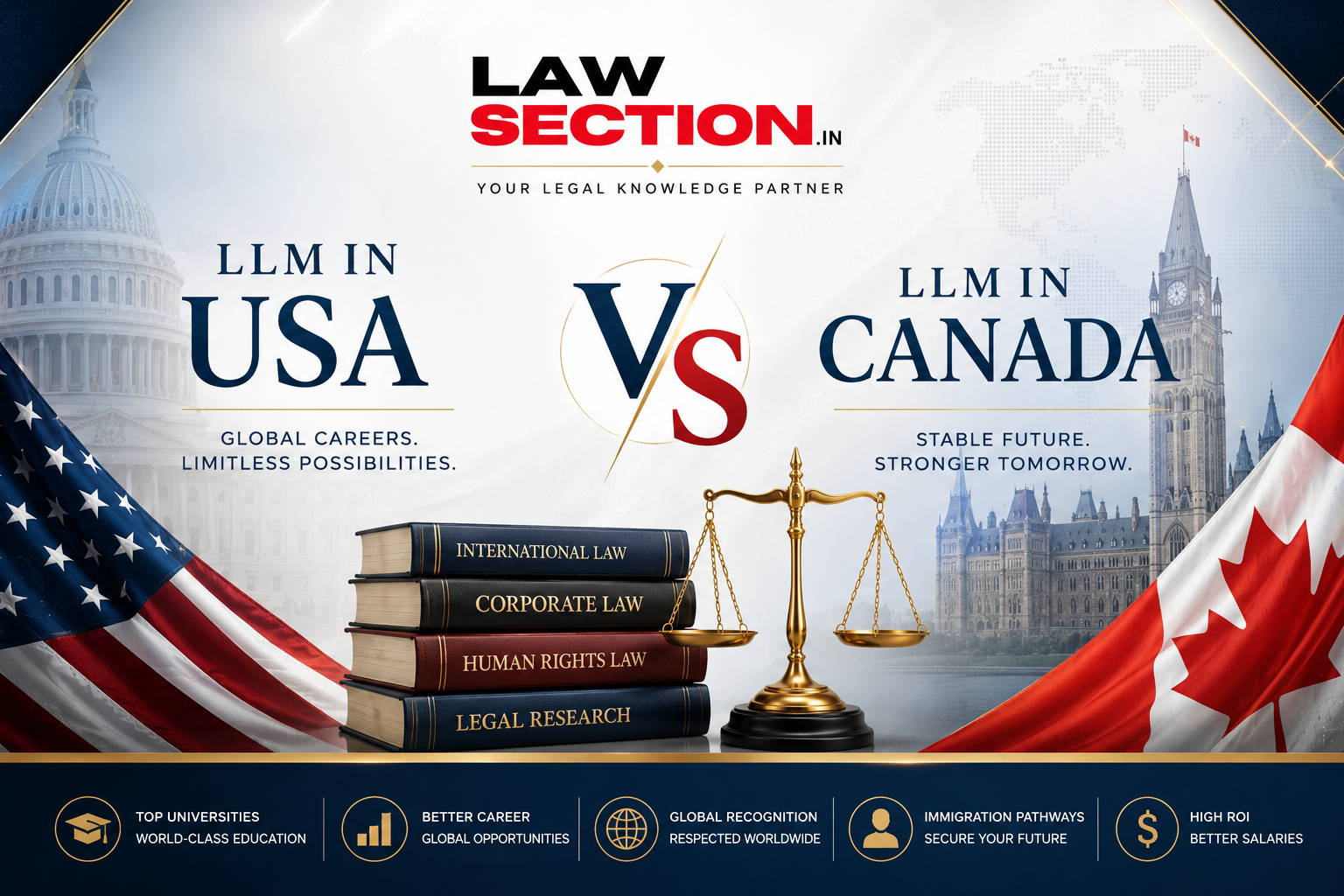
LLM in Canada vs LLM in USA vs LLM in UK – Which Is Better?
Choosing the best country depends on your long-term goals.
| Factor | Canada | USA | UK |
|---|---|---|---|
| Tuition Cost | Moderate | High | Moderate |
| Total Cost | Lower than USA | Highest | Moderate |
| PR Possibility | Strong | Limited | Moderate |
| Work After Study | PGWP up to 3 years | OPT up to 12 months | 2-year PSW |
| Licensing Route | NCA + Provincial Law Society | NY Bar in selected states | SQE Route |
| Immigration Stability | Better | Uncertain | Moderate |
| Best For | PR + Career + Balanced Cost | Prestige + NY Bar | Faster and Shorter Degree |
When Canada Makes More Sense
Choose Canada if:
- You want a better PR pathway
- You want to work in Canada after graduation
- You prefer a lower overall cost than the USA
- You are open to completing the NCA and licensing route
When Another Country May Be Better
- Choose USA if NY Bar eligibility and global prestige are your top priorities
- Choose UK if you want a shorter route and plan to pursue the SQE pathway
Scholarships for LLM in Canada for Indian Students
Many Canadian universities offer merit-based scholarships, entrance awards, and partial tuition waivers for international students.
| University | Scholarship Type |
|---|---|
| University of Toronto | Merit Scholarships and Faculty Awards |
| UBC | International Tuition Awards |
| Osgoode Hall | Entrance Scholarships |
| McGill University | Graduate Funding and Assistantships |
| University of Ottawa | International Student Scholarships |
You can also explore:
- Shastri Indo-Canadian Institute Scholarships
- Commonwealth Scholarships
- Provincial and university-specific bursaries
Explore LLM Programs in Canada – Compare Universities, Fees, NCA & PR Pathway
Choosing the right university is more important than choosing the country itself.
Different Canadian law schools vary in:
• Tuition fees
• NCA compatibility
• Specialisation strengths
• Scholarship availability
• Provincial job market
• PR opportunities after graduation
What You Can Compare in Our Canada LLM Directory
- Admission requirements (LLB %, IELTS/TOEFL, SOP)
- Application deadlines
- Tuition and total cost
- NCA and licensing notes
- City-wise living expenses
- Scholarships and assistantships
- PR and work permit opportunities
Latest Post for AIBE Exam (XX1) aspirants


Next Steps for Indian Students Planning LLM in Canada (2026–2027 Intake)
Step 1: Decide Your Goal
Before shortlisting universities, decide whether your primary goal is:
- PR and work in Canada
- Becoming a licensed lawyer through the NCA route
- Improving your career prospects in India
- Academic and research opportunities
Step 2: Shortlist 4–6 Universities Strategically
Balance your list with:
- 1–2 ambitious universities
- 2–3 realistic universities
- 1 safer option
Step 3: Calculate Total Cost and ROI
Evaluate:
- Tuition fees
- Living expenses
- Scholarship chances
- Work permit duration
- Probability of PR or licensing
Step 4: Prepare Documents Early
Most Canadian LLM applications require:
- Academic transcripts
- LLB degree
- Statement of Purpose
- Letters of Recommendation
- Resume / CV
- IELTS or TOEFL score
Applications for Fall 2026 intake generally begin 8–10 months in advance.
Step 5: Understand NCA and Immigration Rules
Always verify:
- Whether your chosen LLM helps with NCA requirements
- Whether the university is eligible for PGWP
- Whether the province offers a strong PR pathway
Frequently Asked Questions (FAQs)
1. Is an LLM in Canada really worth it for Indian law students?
Yes, if you want better work opportunities, a possible PR pathway, and a lower overall cost than the USA. However, it may not be worth it if you only want a prestigious foreign degree without planning for NCA or jobs.
2. Can I get PR in Canada after completing an LLM?
Possibly, yes. Many students use their PGWP and Canadian work experience to apply for PR through Express Entry or a provincial program. However, PR is never guaranteed.
3. Will an LLM in Canada allow me to practise law there?
Not directly. After your LLM, you usually need to complete the NCA process and provincial licensing requirements before you can practise as a lawyer.
4. How difficult is it to find a job after an LLM in Canada?
Finding a job is possible, especially in corporate, compliance, business, and policy roles. However, law firm jobs are competitive and usually require networking, experience, and sometimes licensing.
5. Which is better for Indian students: Canada or USA for an LLM?
Canada is usually better if you want lower cost, work opportunities, and a stronger PR pathway. On the other hand, the USA may be better if your priority is NY Bar eligibility and global brand value.
Editorial Review & Sources
This guide on LLM in Canada (2026–2027) has been reviewed and verified by the Lawsection.in Editorial Team in accordance with our editorial standards and legal education research process.
The information in this guide has been cross-checked using:
- Official Canadian university LLM program pages
- National Committee on Accreditation (NCA) guidelines
- Provincial law society and licensing authority rules
- Government of Canada study permit, PGWP, and immigration guidance
We aim to provide accurate, practical, and up-to-date information for Indian students planning an LLM in Canada. However, admission requirements, tuition fees, NCA criteria, visa rules, work permit policies, and PR pathways may change over time. Therefore, applicants should always verify the latest details directly from official universities, licensing bodies, and Canadian government sources before applying.
