Why PR Pathways After an LLM in Canada Matter in 2026
Reviewed by Rajni Bala, Assistant Professor of Law | Academic Review Panel
Last Updated: June 05, 2026
For international law graduates, Canada continues to be one of the most attractive destinations for advanced legal education and long-term immigration opportunities. While many students initially pursue a Master of Laws (LLM) to gain specialized legal knowledge, a significant number also explore pathways that may help them build a long-term career and eventually apply for permanent residence in Canada.
In 2026, Canada’s immigration system continues to prioritize skilled workers, Canadian education, language proficiency, and eligible work experience. As a result, graduates of Canadian LLM programs may become eligible for various immigration pathways depending on their qualifications, employment history, and provincial requirements.
If you are still researching legal education opportunities, explore our LLM in Canada Hub Guide for detailed information on universities, tuition fees, scholarships, admissions, student visas, and career prospects.
However, students should remember that immigration policies can change. Therefore, readers should always verify the latest requirements directly through the official Immigration, Refugees and Citizenship Canada (IRCC) website and the relevant provincial immigration authorities before making important decisions.
Whether you are an international student, a practicing lawyer, or a recent law graduate, this guide explains the most relevant PR pathways after an LLM in Canada, including Post-Graduation Work Permits (PGWP), Express Entry, Provincial Nominee Programs (PNPs), eligibility requirements, timelines, and practical considerations for 2026–2027.
Explore more -> Jobs after LLM | Canada Student Visa | Indian Lawyers Practice in Canada | Cost of LLM | Best LLM Specializations
Quick Answer: Can You Get PR After an LLM in Canada?
Yes, many international graduates pursue permanent residence after completing an LLM in Canada. However, an LLM alone does not automatically grant PR.
Most successful applicants follow a pathway similar to:
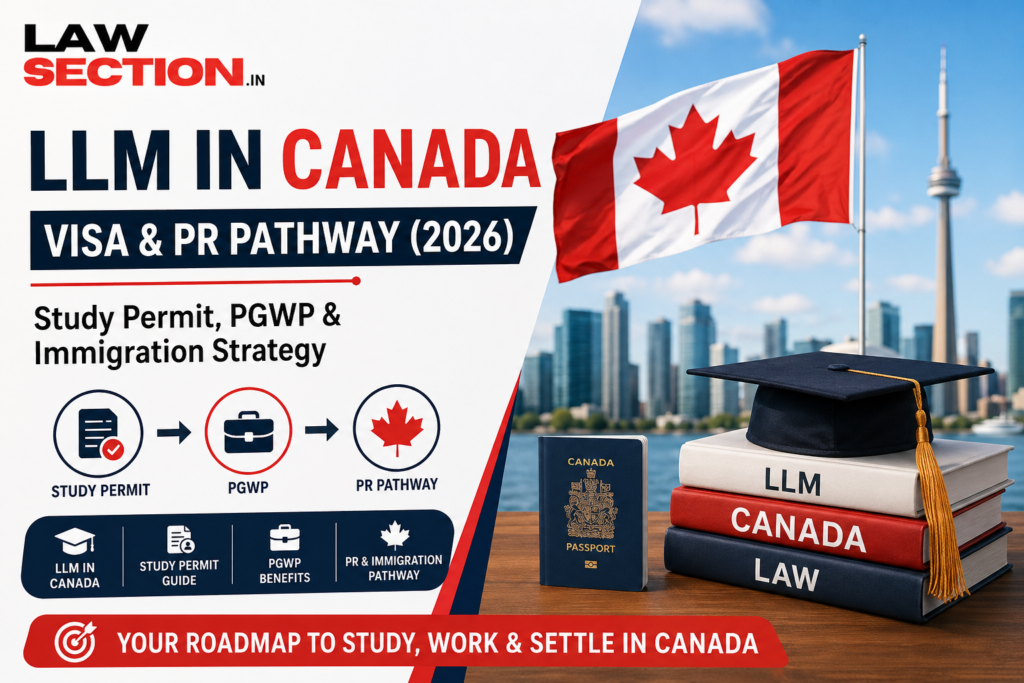
LLM → PGWP → Skilled Canadian Work Experience → Express Entry or PNP → Permanent Residence
The most common immigration pathways include:
| Immigration Pathway | Main Requirement | PR Potential |
|---|---|---|
| Express Entry (CEC) | Canadian work experience | High |
| Express Entry (FSW) | Skilled work experience and CRS score | High |
| Provincial Nominee Programs (PNPs) | Provincial nomination | Very High |
| Atlantic Immigration Program | Employer support | Moderate to High |
| Rural Community Pathways | Eligible local employment | Moderate |
| Employer-Supported Provincial Streams | Province-specific requirements | Moderate to High |
Key Takeaways
- An LLM does not automatically lead to permanent residence.
- A Post-Graduation Work Permit (PGWP) often serves as the first step toward immigration.
- Canadian work experience significantly improves immigration prospects.
- Express Entry and Provincial Nominee Programs remain the most common PR routes.
- Provincial nomination opportunities may strengthen an applicant’s immigration profile.
Can You Get PR After an LLM in Canada?
Many prospective students ask whether an LLM directly leads to permanent residence in Canada.
The answer is no. An LLM by itself does not guarantee immigration status or permanent residence.
However, a Canadian postgraduate qualification may improve an applicant’s profile by providing access to Canadian education credentials, work permit opportunities, and potential pathways to gain skilled Canadian work experience. Consequently, many international graduates use their LLM as part of a broader immigration strategy.
What Happens After Completing an LLM in Canada?
An LLM alone does not automatically provide permanent residence.
However, a Canadian postgraduate qualification can strengthen an immigration profile because it may contribute to:
- Canadian education points
- Better employment opportunities
- Provincial nomination eligibility
- Canadian work experience opportunities
- Higher Comprehensive Ranking System (CRS) scores
- Long-term settlement prospects
As a result, many graduates use their LLM as part of a broader immigration strategy rather than viewing the degree itself as a direct route to PR.
Typical PR Journey for International LLM Graduates
Stage 1: Complete a Canadian LLM
Students graduate from a recognized Canadian institution.
Stage 2: Obtain a Post-Graduation Work Permit (PGWP)
Eligible graduates may apply for a Post-Graduation Work Permit, allowing them to gain Canadian work experience.
Stage 3: Gain Skilled Work Experience
Graduates often seek positions such as:
- Legal Researcher
- Compliance Analyst
- Contract Specialist
- Policy Analyst
- Corporate Governance Associate
- Legal Consultant
- Regulatory Affairs Professional
Stage 4: Enter an Immigration Program
Common routes include:
- Canadian Experience Class (CEC)
- Federal Skilled Worker Program (FSW)
- Provincial Nominee Programs (PNPs)
Stage 5: Apply for Permanent Residence
Eligible candidates may receive an Invitation to Apply (ITA) through applicable immigration programs.
Express Entry After an LLM in Canada
What is Express Entry?
Express Entry is Canada’s primary system for managing applications under certain economic immigration programs.
It operates through a ranking mechanism known as the Comprehensive Ranking System (CRS).
Applicants receive scores based on factors such as:
- Age
- Education
- Language ability
- Canadian work experience
- Foreign work experience
- Additional factors
Canadian Experience Class (CEC)
Many international graduates eventually target the Canadian Experience Class.
Typical Requirements
- Eligible Canadian work experience
- Language proficiency requirements
- Admissibility requirements
Why It Is Popular
CEC often becomes a preferred option because candidates already possess Canadian education and work experience.
Federal Skilled Worker Program (FSW)
Some graduates may qualify through the Federal Skilled Worker Program.
Factors considered include:
- Education
- Skilled work experience
- Language proficiency
- Adaptability
- Age
Applicants are ranked within the Express Entry system.
Provinces Popular Among International LLM Students
| Province | Immigration Opportunities | Popular Cities |
|---|---|---|
| Ontario | Express Entry + OINP | Toronto, Ottawa |
| British Columbia | BC PNP | Vancouver |
| Alberta | AAIP | Calgary, Edmonton |
| Manitoba | MPNP | Winnipeg |
| Nova Scotia | Provincial Streams | Halifax |
| Saskatchewan | SINP | Regina, Saskatoon |
Post-Graduation Work Permit (PGWP)
Why PGWP Is Important
For many students, the PGWP serves as the bridge between education and permanent residence.
The permit allows graduates to gain valuable Canadian work experience that may support future immigration applications.
Benefits of PGWP
- Legal work authorization
- Canadian employment experience
- Enhanced CRS score potential
- Improved eligibility for provincial programs
Can Lawyers Practice in Canada Immediately After an LLM?
Not necessarily.
Many internationally trained lawyers must complete additional licensing requirements before practicing law in Canada.
These requirements may vary depending on:
- Province
- Legal background
- Regulatory authority
As a result, students should distinguish between:
Immigration Eligibility and Professional Licensing Eligibility
The two processes are separate.
Jobs That May Support PR Eligibility After an LLM
Many graduates pursue professional roles that may qualify as skilled employment.
Examples include:
| Career Path | Potential Relevance |
|---|---|
| Legal Researcher | Skilled professional work |
| Compliance Officer | Common among international graduates |
| Policy Analyst | Government and NGO opportunities |
| Corporate Governance Specialist | Corporate sector demand |
| Contract Manager | Business and commercial settings |
| Regulatory Affairs Associate | Growing compliance sector |
| Legal Consultant | Subject to employer requirements |
Estimated Timeline: LLM to PR in Canada
| Stage | Approximate Time |
|---|---|
| Complete LLM | 1 year |
| Obtain PGWP | Varies |
| Gain Skilled Work Experience | Around 1 year or more |
| Enter Express Entry Pool | After eligibility requirements are met |
| PR Processing | Depends on program and government processing times |
Practical Reality
Many graduates complete the entire journey within approximately 2–5 years depending on:
- Employment outcomes
- CRS score
- Provincial nominations
- Immigration policy changes
- Individual circumstances
How CRS Scores Affect PR Chances After an LLM
The Comprehensive Ranking System (CRS) plays an important role in Canada’s Express Entry system. Applicants receive points based on factors such as age, education, language proficiency, Canadian work experience, foreign work experience, and additional credentials.
For many LLM graduates, improving language test scores and gaining Canadian work experience can significantly strengthen their CRS profile. In some cases, obtaining a provincial nomination may further improve competitiveness within the immigration system.
Because CRS thresholds can change, applicants should regularly monitor immigration updates and assess their profiles accordingly.
Choosing the Right Province for Immigration Goals
When selecting an LLM program, students should consider more than university rankings alone. Employment opportunities, cost of living, professional networks, and provincial immigration pathways can all influence long-term outcomes.
Ontario and British Columbia remain popular destinations because of their large job markets. However, provinces such as Alberta, Manitoba, Saskatchewan, and Nova Scotia may offer additional immigration opportunities depending on individual circumstances and labour market needs.
Students should evaluate both educational and immigration considerations before choosing a province.
Common Mistakes International LLM Students Should Avoid
Many students focus exclusively on obtaining an LLM while overlooking important immigration and career planning considerations.
Common mistakes include:
- Assuming that an LLM automatically leads to permanent residence.
- Ignoring language test preparation.
- Delaying the search for skilled employment.
- Failing to research provincial immigration pathways.
- Choosing a program solely based on immigration expectations.
A balanced approach that combines education, employability, and long-term planning often produces stronger outcomes.
Common Challenges International LLM Graduates Face
Although Canada offers strong opportunities for international graduates, students should also understand potential challenges.
1. Employment Competition
Legal, compliance, and policy positions can be competitive, particularly in major cities.
2. Licensing Requirements
Internationally trained lawyers often need additional accreditation before practicing law in Canada.
3. Immigration Rule Changes
Immigration programs, eligibility requirements, and invitation thresholds may change over time.
4. CRS Score Variability
Express Entry invitation scores can fluctuate depending on government priorities and applicant pools.
5. Regional Differences
Employment opportunities and immigration pathways can differ significantly between provinces and communities.
Scholarships and Funding Considerations
Reducing educational debt can support long-term settlement goals.
Potential funding sources include:
- University entrance scholarships
- Graduate awards
- Research funding
- International student scholarships
- Faculty-specific legal scholarships
Students should verify scholarship availability directly with universities because funding opportunities change regularly.
Is Canada Still a Good PR Destination for Law Graduates in 2026?
For many international law graduates, Canada remains one of the strongest long-term destinations because it combines:
- High-quality legal education
- Internationally respected universities
- Work permit opportunities
- Multiple immigration pathways
- Diverse employment markets
- Strong quality of life
However, success depends on careful planning, employability, language proficiency, and immigration eligibility.
People Also Ask About PR Pathways After LLM in Canada
Who Should Reconsider an LLM Solely for PR?
An LLM may not be the ideal choice if:
- Your only goal is obtaining permanent residence.
- You have little interest in legal, compliance, governance, or policy-related careers.
- You expect immediate immigration outcomes after graduation.
- You are not financially prepared for tuition and living expenses.
- You are unwilling to gain professional work experience after graduation.
Students should select an LLM primarily for educational and career development reasons rather than viewing it solely as an immigration strategy.
Related Canada LLM Guides
- LLM in Canada (Complete Hub Guide)
- Jobs After LLM in Canada
- Cost of Studying LLM in Canada
- Canada Student Visa Guide
- Best LLM Specializations for Indian Students
Frequently Asked Questions (FAQs)
1. Does completing an LLM in Canada automatically qualify me for permanent residence?
No. Completing an LLM in Canada does not automatically grant permanent residence. However, a Canadian postgraduate qualification may strengthen your immigration profile. Most graduates pursue PR through pathways such as Express Entry or Provincial Nominee Programs after meeting the relevant eligibility requirements.
2. Can international students stay in Canada after finishing an LLM?
Many international students may be eligible to remain in Canada temporarily after graduation through a Post-Graduation Work Permit (PGWP), provided they meet applicable requirements. This work experience can often play an important role in future immigration applications.
3. Do I need to become a licensed lawyer in Canada to apply for PR?
No. Permanent residence eligibility and legal licensing are separate processes. While some graduates pursue lawyer licensing pathways, others work in areas such as compliance, policy, governance, consulting, research, or regulatory affairs and may still qualify under eligible immigration programs.
4. What factors improve my chances of getting PR after an LLM in Canada?
Several factors can strengthen an immigration profile, including strong English or French language test scores, Canadian work experience, relevant professional experience, a competitive CRS score, and eligibility for a Provincial Nominee Program. Individual outcomes depend on the immigration pathway selected and current program requirements.
5. Should I choose an LLM program based on PR opportunities alone?
Not necessarily. While immigration prospects are important, students should also consider university reputation, specialization options, tuition costs, career outcomes, location, networking opportunities, and long-term professional goals. A balanced decision often leads to better academic and career results.
Conclusion
For many international law graduates, Canada continues to offer one of the most attractive combinations of legal education, employment opportunities, and potential immigration pathways.
However, students should understand that an LLM alone does not guarantee permanent residence. Instead, successful applicants typically combine a Canadian legal qualification with strong language proficiency, skilled work experience, and a carefully planned immigration strategy.
In 2026–2027, the most common pathway remains:
LLM → PGWP → Skilled Canadian Work Experience → Express Entry or Provincial Nominee Program → Permanent Residence
Ultimately, prospective students should focus not only on immigration opportunities but also on academic quality, professional development, and long-term career objectives. By combining a respected Canadian legal education with practical experience and informed planning, international graduates can position themselves strongly for both professional success and future immigration opportunities in Canada.
Because immigration policies, eligibility requirements, and provincial nomination criteria may change over time, prospective students should always verify the latest information through Immigration, Refugees and Citizenship Canada (IRCC) and the relevant provincial immigration authorities before making important decisions.
Related Guides for LLM in Canada
Planning to pursue an LLM in Canada? Explore our carefully curated and verified guides covering top-ranked law universities across Canada. These resources provide clear and structured insights into admission requirements, eligibility criteria, tuition fees, intake periods, scholarships, and career opportunities — all based on official university sources and updated for 2026.