
LLM Abroad (2026-2027): Best Countries, Top Universities, Costs, Scholarships, Visa & Career Outcomes
Planning to pursue an LLM abroad in 2026 but unsure whether the USA, UK, Canada, Australia, New Zealand, Germany, Ireland, or Europe offers the best return on investment?
Choosing the wrong destination can lead to higher tuition costs, limited work opportunities, visa challenges, or lower career outcomes after graduation.
This comprehensive guide helps law graduates, lawyers, legal professionals, and international students compare the world’s most popular LLM destinations based on:
- Best countries for LLM studies
- Tuition fees and living costs
- Scholarships and funding opportunities
- Post-study work visas and immigration pathways
- Salary expectations and career opportunities
- Bar qualification routes and legal practice options
- University rankings and global reputation
- Return on investment (ROI) and employability
Whether your goal is to join an international law firm, qualify in a foreign jurisdiction, build a global legal career, specialise in corporate or technology law, pursue legal research, or improve immigration prospects, this guide provides practical, evidence-based comparisons to help you make an informed decision.
This guide is part of our comprehensive Study Law Abroad by Lawsection.in Editorial Team is designed specifically for International students and local legal professionals who want clear, practical, and reliable answers before making this high-investment decision.
Before you apply — read this guide to make an informed, strategic, and financially sound decision.
All information is carefully compiled using official university sources, immigration policies, and regulatory frameworks, ensuring accuracy, transparency, and compliance with current 2026 standards.
Which Country is Best for LLM Abroad in 2026-2027?
There is no single “best” country for LLM abroad.
| Goal | Best Destination |
|---|---|
| Highest Salary Potential | USA |
| Fastest LLM Completion | UK |
| PR & Immigration Opportunities | Canada |
| Work-Life Balance | Australia |
| Affordable Education | Germany |
| Research & PhD Pathways | Europe |
| International Commercial Law | UK |
| Global Law Firm Careers | USA |
| Long-Term Settlement | Canada & Australia |
The right choice depends on YOUR budget and career goal — compare all options below before deciding.
Best Countries to Study LLM Abroad for International Students
Not every country is right for every student — compare cost, career opportunities, and visa outcomes below to choose the BEST LLM destination for your goals.
LLM In USA
Best for: High-paying corporate law jobs & global law firms
Total Cost: ₹50–80 lakhs (approx.)
Work Opportunity: OPT visa available after graduation
Choose USA only if you can afford high investment and target top-tier law firms or NY Bar eligibility.
LLM In UK
Best for: Best for: Fast-track LLM & international exposure
Cost: ₹20–45 lakhs (approx.)
Work: Work: Graduate Route available
Best if you want quick degree, but PR options are limited compared to Canada.
LLM In Canada
Best for: PR pathway & long-term settlement
Cost: ₹20–55 lakh (approx.)
Work: PGWP visa available
Ideal if your priority is PR and long-term career, not immediate high salary.
LLM In Australia
Best for: Balanced career + work opportunities
Cost: ₹30–60 lakh (approx.)
Work: Temporary Graduate Visa options
Good balance option, but requires strong planning for long-term PR.
Tip: The best LLM country is not the most popular one — it is the one that matches your career goal, budget, and long-term plans.
LLM Abroad Comparison 2026: USA vs UK vs Canada vs Australia (Cost, Salary, PR)
Choosing the wrong country can cost you ₹20–80 lakhs and impact your career. Compare all major LLM destinations below based on cost, job opportunities, and PR options before making your final decision.
Quick Comparison: Here is how the top LLM destinations compare for International students:
| Country | Best For | Typical Duration | Approx Total Cost (₹) | Post-Study Work |
|---|---|---|---|---|
| UK | Corporate law, international firms | 1 Year | 18–45 lakh (approx.) | Yes (Graduate Route) |
| USA | Top-ranked schools, niche specialisations | 1 Year | 35–80 lakh (approx.) | Yes (OPT) |
| Canada | Immigration-friendly pathways, public universities | 1-2 Years | 22–55 lakh (approx.) | Yes (PGWP, eligible programs) |
| Australia | Work rights, strong universities | 1-2 Years | 25–60 lakh (approx.) | Yes (Temporary Graduate visa) |
| Germany | Affordable study, EU exposure | 1-2 Years | 10–30 lakh (approx.) | Yes (after study, conditions apply) |
| New Zealand | Smaller intakes, work pathways | 1-1.5 Year | 20–45 lakh (approx.) | Yes (conditions apply) |
What This Comparison Means for You
- If your goal is high salary & global firms → Choose USA
- If you want fastest LLM with moderate cost → Choose UK
- If your priority is PR & settlement → Choose Canada
- If you want balanced career + lifestyle → Choose Australia
Still confused? Explore detailed country guides below to make the right decision.
Note: Costs and work rules vary by university, city, and immigration updates. Always verify from official university and immigration sources before applying.
Simple Formula to Choose Your LLM Destination
Choosing the right country for your LLM is not about popularity — it is about aligning your budget, career goal, and long-term plans. Use this simple formula to decide smartly:
Best for global law firms, NY Bar opportunities, and high salary potential.
Ideal for 1-year LLM with quick international exposure and structured career entry.
Best option for immigration pathways and long-term stability after LLM.
Strong universities, good work rights, and balanced post-study opportunities.
The smartest decision is not choosing the “best country” — it is choosing the right country for your personal goals.
Top Universities Offering LLM Programs Abroad
| University | Country |
|---|---|
| Harvard Law School | USA |
| Yale Law School | USA |
| University of Oxford | UK |
| University of Cambridge | UK |
| National University of Singapore | Singapore |
Key LLM Abroad Decisions Every Indian Law Graduate Must Understand
Before choosing an LLM abroad in 2026–2027, Indian law graduates must clearly understand three critical aspects — degree validity in India, the ability to practice law abroad, and whether an LLM abroad is better than an Indian LL.M. These factors directly impact career outcomes, Bar eligibility, and long-term return on investment.
Is Foreign LLM Valid in India?
A foreign LLM degree is academically recognised in India but does not automatically allow legal practice in Indian courts.
To practice law in India, candidates must:
- Hold a recognised LL.B. degree
- Be enrolled with a State Bar Council
- Qualify the All India Bar Examination (AIBE)
- must meet all relevant requirements as updated with time.
An LLM from the USA, UK, Canada, Australia or Germany is treated as a postgraduate specialisation, not a replacement for LL.B.
Best suited for:
- Legal academia
- Corporate & international law roles
- Policy, research, and compliance careers
- booster for Law Practice
Read detailed BCI rules: Is Foreign LLM Valid in India? (BCI Rules Explained)
Can You Practice Law Abroad After an LLM?
An LLM alone does not grant an automatic law licence in most countries. Bar eligibility depends on country-specific regulations.
Country-wise overview:
- USA: Some states (e.g. New York, California) allow foreign-trained lawyers to appear for the Bar after an approved LLM.
- UK: Indian graduates can qualify through the Solicitors Qualifying Examination (SQE) route.
- Canada: Requires credential assessment via NCA before licensing exams.
- Australia: May require additional academic or practical legal training.
Always check:
- Bar authority rules
- Course credit structure
- Visa & work rights
Explore eligibility pathways: How Indian Lawyers Can Qualify for Bar Exams Abroad
Browse best Law colleges in best countries
Explore country-wise and university-wise LLM programmes abroad with detailed information on fees, eligibility, and specialisations.
LLM Abroad Latest Posts


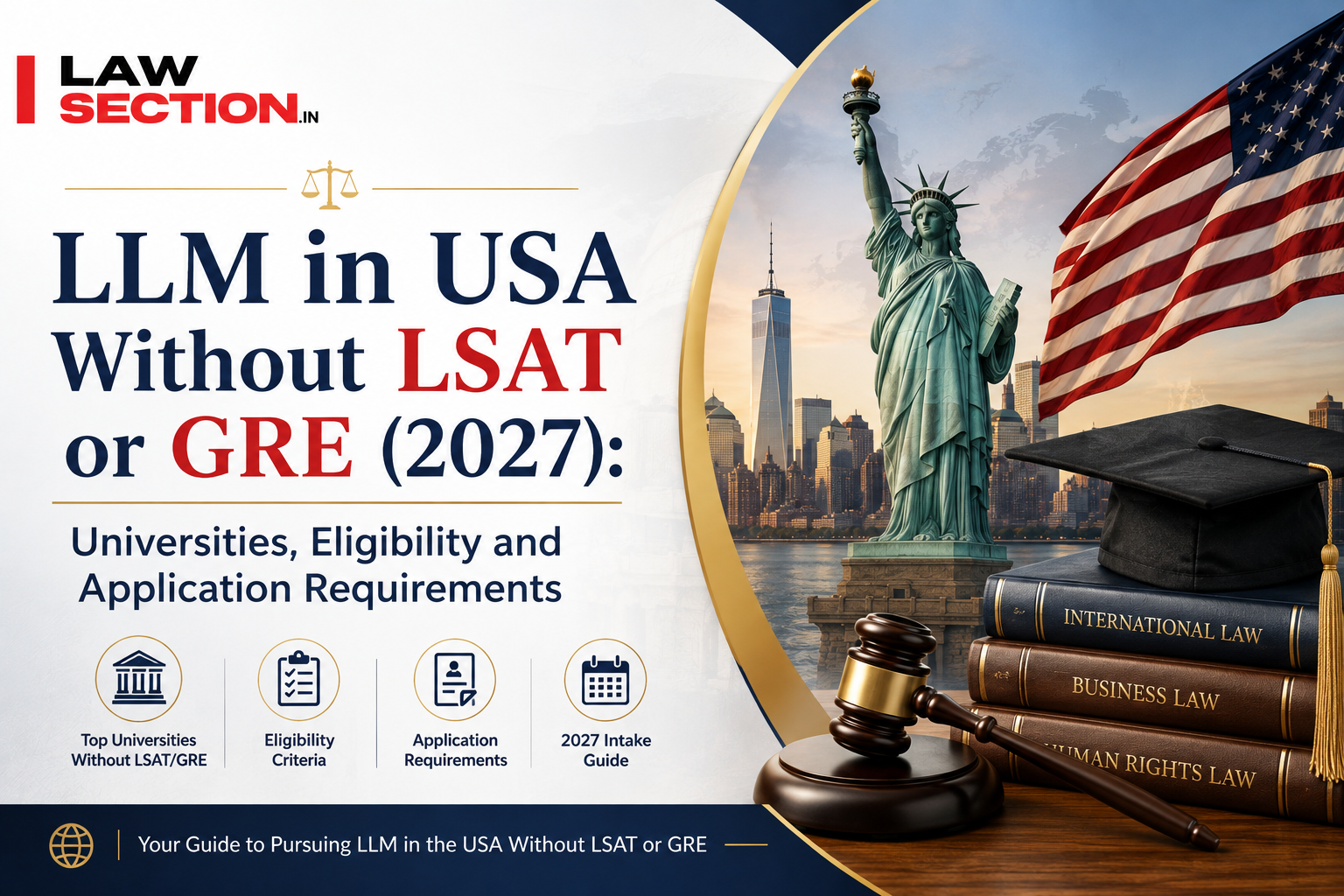

Eligibility for LLM Abroad After Indian LLB
Most universities abroad require an LLB/LLB-equivalent degree, academic transcripts, an English test score (IELTS/TOEFL/PTE), and a Statement of Purpose. Some universities may also require letters of recommendation, a CV, and writing samples depending on the country and specialisation. A strong Statement of Purpose (SOP) is a key part of LLM admissions abroad, especially for competitive universities.
Basic eligibility (common across countries)
A recognised law degree (LLB/5-year integrated law), strong academic record, and required documents like transcripts and ID proof are typically needed. Work experience is optional but can strengthen applications for competitive universities.
English language requirements
Most universities accept IELTS or TOEFL; some also accept PTE Academic or Duolingo (selected universities). Each university sets its own minimum score, so always check the official course page.
Entrance exams (only if required)
Many LLM programmes do not require an entrance exam, but certain universities may ask for additional assessments, interviews, or a writing sample. Country-specific requirements vary.
Is LLM Abroad Valid in India?
Indian lawyers who pursue an LLM abroad can use the degree for academic and professional advancement in India.
However, recognition may depend on:
- Bar Council of India rules
- University recognition
- Equivalence certification
Red full article -> Is LLM Abroad Valid in India? (BCI Rules Explained)
Student Visa & Post-Study Work Rights After LLM Abroad
Visa rules and post-study work options differ by country and can change over time. Always verify requirements on the official immigration website before applying.
| Country | Main Student Visa | Post-study work option |
|---|---|---|
| UK | Student Visa | Graduate Route (if eligible) |
| USA | F-1 Student Visa | OPT (if eligible) |
| Canada | Study Permit | PGWP (if eligible) |
| Australia | Student Visa | Temporary Graduate (if eligible) |
Career Scope After LLM Abroad
An LLM degree from a foreign university opens diverse career opportunities across legal practice, corporate roles, academia, and international organisations. The career scope depends on the country of study, specialisation, and professional goals.
Job Opportunities in International Law Firms
LLM abroad can help you qualify for cross-border practice roles, especially in corporate, arbitration, trade, and compliance teams. Your chances improve when your specialisation matches the firm’s practice area.
Best for: Corporate/Arbitration/Compliance track.
Corporate & In-House Legal Roles
Many global companies hire LLM graduates for contracts, regulatory affairs, data privacy, M&A support, and risk management roles. Internships and certifications alongside LLM can significantly strengthen outcomes.
Best for: In-house counsel, and corporate roles.
Academia & Legal Research Roles
LLM abroad can open pathways into research fellowships, teaching assistant roles, publications, and PhD admissions at top universities. A strong writing sample and research-focused modules matter most.
Best for: Teaching, research, and PhD route.
International Organisations & NGOs
International organisations & NGOs value candidates with specialisations in human rights, international law, refugee law & policy. Practical experience through internships, clinics & field projects.
Best for: Human rights, policy, NGO careers.
Career opportunities after LLM abroad vary by country. Countries like the UK, Canada, and Australia offer post-study work options, while the USA provides strong academic and corporate exposure through OPT and research roles.
Frequently Asked Questions (FAQs)
1. Which country is best for an LLM abroad in 2026-2027?
There is no single best country for every student. The ideal destination depends on career goals, budget, preferred legal system, immigration plans, and post-study employment opportunities. The USA remains a leading choice for high-paying international legal careers, while the UK is known for one-year LLM programmes and strong global recognition. Canada and Australia attract students seeking post-study work opportunities, whereas Germany and several European countries offer affordable legal education and research-focused pathways.
2. Is an LLM from abroad worth it?
An LLM abroad can be highly valuable for students seeking international legal expertise, specialised knowledge, global professional networks, and enhanced career opportunities. The return on investment depends on factors such as university reputation, specialisation, work experience, scholarship funding, and long-term career objectives. For many graduates, an LLM serves as a gateway to international law firms, multinational corporations, policy institutions, academia, and cross-border legal practice.
3. Can international students work while studying an LLM abroad?
Many countries allow international students to undertake limited part-time employment during their studies, subject to visa conditions and local immigration laws. Work rights vary by jurisdiction and may change over time. Students should always verify the latest requirements through official government immigration authorities before making decisions.
4. Which LLM specialisation has the highest career potential?
The most in-demand LLM specialisations often include Corporate Law, International Business Law, Technology Law, Intellectual Property Law, Arbitration and Dispute Resolution, Competition Law, Banking and Finance Law, Environmental Law, Human Rights Law, and Data Privacy Law. The best specialisation depends on individual career goals, industry demand, and regional market opportunities.
5. How much does an LLM abroad cost?
The total cost of studying an LLM abroad varies significantly by country, institution, lifestyle, and programme duration. In many destinations, overall expenses typically include tuition fees, accommodation, health insurance, visa costs, travel expenses, and daily living costs. Students should evaluate both direct educational costs and long-term return on investment before choosing a destination.
6. Can I practise law in another country after completing an LLM?
Completing an LLM does not automatically grant the right to practise law in another jurisdiction. Most countries require additional licensing, bar examinations, professional training, or regulatory approval before legal practice is permitted. Students should carefully review the qualification requirements of the jurisdiction where they intend to work.
Conclusion
Choosing to pursue an LLM abroad is not simply an academic decision—it is a long-term investment in your legal expertise, professional network, international exposure, and future career opportunities.
The best destination is not necessarily the most prestigious university or the highest-ranked country. Rather, it is the option that aligns most closely with your career ambitions, financial circumstances, preferred legal system, immigration objectives, and professional development goals.
Whether you are considering the USA for global corporate law opportunities, the UK for internationally recognised legal education, Canada and Australia for post-study work pathways, or Europe for affordability and research excellence, careful planning and informed decision-making are essential.
Before applying, prospective students should compare universities, specialisations, tuition costs, scholarship opportunities, visa requirements, work rights, bar qualification pathways, and long-term career outcomes.
A well-planned LLM can strengthen your professional profile, expand international opportunities, and open doors across legal practice, business, government, policy, compliance, academia, arbitration, and multinational organisations worldwide.
Explore the detailed country guides below to compare destinations, evaluate opportunities, and identify the most suitable LLM pathway for your future legal career.
If you are exploring international legal education, you may also find these guides helpful:
- Study Law Abroad (Complete Guide)
- LLM in USA for International Lawyers
- LLM in UK for International Students
- LLM In Canada after Indian LLB
- LLM in Australia for International law graduates
These resources will help you compare destinations, understand eligibility, and plan your legal education journey more confidently.
Sources & Update Policy
This page is reviewed using official university websites, embassy portals, and immigration authorities. Read our Editorial Policy & Review Process
