
Law Colleges in British Columbia – Complete 2026 Guide
by Lawsection.in editorial team | last updated: April 21, 2026
British Columbia is one of the best provinces in Canada for studying law. Home to globally respected universities, leading law firms, major courts, and excellent post-study work opportunities, the province attracts both Canadian and international students.
Students studying law in British Columbia benefit from:
- Internationally recognised universities
- Strong internship and legal clinic opportunities
- Access to major legal markets in Vancouver and Victoria
- High-quality faculty and research facilities
- Excellent career opportunities after graduation
Whether you want to pursue a Juris Doctor (JD), Master of Laws (LLM), or a specialised legal program, British Columbia offers some of Canada’s strongest public law schools.
Best Law Colleges in British Columbia at a Glance
The best law colleges in British Columbia in 2026 are the University of British Columbia, University of Victoria, and Thompson Rivers University. UBC is best for global reputation and placements, the University of Victoria is ideal for Indigenous and experiential law, while Thompson Rivers University is known for practical JD training and smaller class sizes.
Continue Exploring Related Guides
You can also explore these related guides to compare more universities, courses and career opportunities:
Quick Overview of Law Colleges in British Columbia
Law schools in British Columbia mainly offer:
- Juris Doctor (JD) – Primary law degree required to practise in Canada
- Master of Laws (LLM) – Advanced postgraduate law specialisation
- PhD in Law – Research-focused doctoral program
- Dual Degrees – JD combined with business, Indigenous law, or public policy programs
Key Highlights
| Particulars | Details |
|---|---|
| Main Degrees Offered | JD, LLM, PhD, Dual Degrees |
| JD Duration | 3 Years |
| LLM Duration | 1 Year |
| Admission Criteria | GPA, LSAT, SOP, References |
| Top Study Cities | Vancouver, Victoria, Kamloops |
| Best For | Corporate Law, Indigenous Law, Environmental Law, International Law |
| Popular Career Fields | Lawyer, Legal Advisor, Government Officer, Compliance, Research |
Furthermore, most law schools in British Columbia emphasise experiential learning through moot courts, internships, co-op programs, and legal clinics.
Browse Verified Law Colleges in British Columbia
Use this guide to explore leading law schools offering world-class legal education.
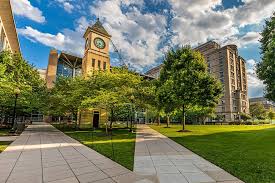
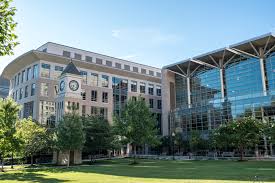
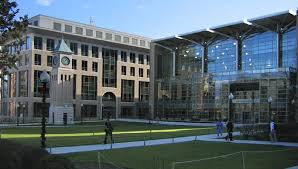

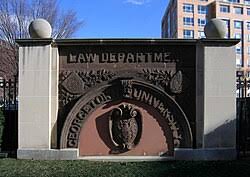
Georgetown University Law Center
- Private Institution
- LLM Abroad, Juris Doctor (JD), Doctor of Juridicial Science (S.J.D)
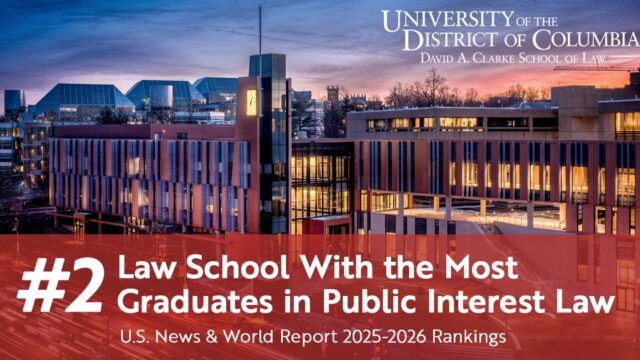

University of the District of Columbia – David A. Clarke School of Law
- Government
- LLM Abroad, Juris Doctor (JD)
As a result, you can confidently shortlist institutions aligned with your career goals and budget.
Why Study Law in British Columbia?
British Columbia offers several advantages that make it one of the best places to study law in Canada.
List of Top Law Colleges & Universities in British Columbia
Convert the following comparison into a proper WordPress table block for better UX, mobile responsiveness and SEO.
| University | Location | Programs Offered | Best Known For | Approx. Annual Tuition Fees | Best For International Students? |
|---|---|---|---|---|---|
| University of British Columbia (Peter A. Allard School of Law) | Vancouver | JD, LLM, PhD | Global reputation, research, corporate law, strong placements | CAD 13,000–45,000 | Yes |
| University of Victoria (Faculty of Law) | Victoria | JD, JD/JID, LLM | Indigenous law, co-op, experiential learning | CAD 10,000–35,000 | Yes |
| Thompson Rivers University (Faculty of Law) | Kamloops | JD | Practical legal training, small classes, student support | CAD 18,000–30,000 | Moderate |
Detailed Overview of Top Law Colleges in British Columbia
1. University of British Columbia – Peter A. Allard School of Law
The University of British Columbia (UBC) is widely regarded as the best law school in British Columbia and one of the top law schools in Canada.
Key Highlights
- Located in Vancouver
- Offers JD, LLM and PhD programs
- Internationally recognised faculty and research
- Strong links with leading law firms and corporations
- Excellent placement and internship opportunities
Best For
- Corporate Law
- International Law
- Business Law
- Students seeking global recognition
Estimated Tuition Fees
- Domestic Students: Approx. CAD 13,000–15,000 per year
- International Students: Approx. CAD 40,000–45,000 per year
2. University of Victoria – Faculty of Law
The University of Victoria (UVic) is one of Canada’s most respected law schools, particularly known for Indigenous law and practical legal education.
Key Highlights
- Located in Victoria
- Offers JD, JD/JID and LLM programs
- Famous for its Indigenous Law program
- Strong co-op and work placement opportunities
- Smaller class sizes compared to UBC
Best For
- Indigenous Law
- Environmental Law
- Experiential Learning
- Students seeking a more personalised environment
Estimated Tuition Fees
- Domestic Students: Approx. CAD 10,000–12,000 per year
- International Students: Approx. CAD 30,000–35,000 per year
3. Thompson Rivers University – Faculty of Law
Thompson Rivers University (TRU) offers a student-centred and practical approach to legal education.
Key Highlights
- Located in Kamloops
- Primarily offers a JD program
- Smaller class sizes and greater faculty interaction
- Strong emphasis on practical legal training
- Supportive learning environment
Best For
- Practical legal skills
- Smaller class sizes
- Students who prefer more individual attention
Estimated Tuition Fees
- Domestic Students: Approx. CAD 18,000–20,000 per year
- International Students: Approx. CAD 28,000–30,000 per year
Law Courses Offered in British Columbia
Juris Doctor (JD)
The Juris Doctor is the main law degree required to become a lawyer in Canada.
Duration
- 3 years
Key Features
- Includes internships and legal clinics
- Covers Canadian legal systems and practice
- Includes moot courts and practical training
- Required before writing the Canadian bar examination
Master of Laws (LLM)
The LLM is suitable for students who already hold an LLB or JD and want to specialise further.
Duration
- 1 year
Popular LLM Specialisations
- Corporate Law
- Environmental Law
- Human Rights Law
- International Law
- Business Law
- Indigenous Law
Additionally, LLM programs are particularly useful for international students who want Canadian legal exposure and better employment opportunities.
Admission Process for Law Colleges in British Columbia
Although requirements vary slightly between universities, the overall admission process is similar.
Admission Requirements for JD Programs
To apply for a JD program, students generally must:
- Hold a recognised bachelor’s degree
- Maintain a strong undergraduate GPA
- Submit LSAT scores
- Provide academic transcripts
- Write a Statement of Purpose or Personal Statement
- Submit letters of recommendation
Admission Requirements for LLM Programs
To apply for an LLM program, students generally must:
- Hold an LLB or JD degree
- Demonstrate English proficiency through IELTS or TOEFL
- Submit academic transcripts
- Submit a Statement of Purpose
- Provide references if required
LSAT and English Language Requirements
| Requirement | Typical Score Needed |
|---|---|
| LSAT for JD Admission | Usually 155–165+ |
| IELTS for International Students | 6.5–7.5 Overall |
| TOEFL iBT | 90–100+ |
A higher LSAT score and strong GPA can significantly improve your chances of admission, especially at UBC and the University of Victoria.
Tuition Fees and Cost of Living in British Columbia
Studying in British Columbia can be more expensive than some other Canadian provinces, particularly in Vancouver.
| Expense | Estimated Annual Cost |
|---|---|
| Tuition Fees | CAD 10,000–45,000 |
| Accommodation | CAD 8,000–18,000 |
| Food and Living Expenses | CAD 5,000–8,000 |
| Books and Miscellaneous | CAD 1,000–2,000 |
Average Total Annual Cost
- Domestic Students: CAD 20,000–30,000
- International Students: CAD 40,000–60,000
Which Law College in British Columbia Should You Choose?
- Choose UBC if you want the best international reputation and corporate law opportunities.
- Choose the University of Victoria if you prefer Indigenous law, co-op programs and smaller class sizes.
- Choose Thompson Rivers University if you want practical legal training and more personalised support.
| If You Want… | Best Choice |
|---|---|
| Best Overall Reputation | University of British Columbia |
| Strong Indigenous Law Program | University of Victoria |
| Practical JD Training | Thompson Rivers University |
| Better International Recognition | University of British Columbia |
| Smaller Class Sizes | Thompson Rivers University |
| More Co-op and Experiential Learning | University of Victoria |
Therefore, the right law school depends on your budget, preferred city, career goals and area of legal specialisation.
How Lawsection.in Verify Law Colleges in British Columbia
We ensure that every law college listed in this guide meets strict quality and credibility standards.
Our verification process includes:
- Accreditation and official approvals
- Faculty quality and academic reputation
- Infrastructure and campus facilities
- Placement and internship records
- Updated admission and tuition information
- Student reviews and industry recognition
As a result, students can rely on this guide to make informed decisions.

Continue Learning (Previous Guide)
Choosing the Right Law College for LLM Abroad?
LLM abroad helps Indian law graduates gain international exposure, specialised legal knowledge, and global career opportunities.
Frequently Asked Questions (FAQs)
Q1. Which law college in British Columbia offers the best career opportunities?
The University of British Columbia offers the strongest career opportunities because of its global reputation, strong placements, and industry connections.
Q2. Is it difficult to get admission into law colleges in British Columbia?
Yes, admissions are competitive. A strong GPA, good LSAT score, and an impressive personal statement can significantly improve your chances.
Q3. Which is better: UBC or the University of Victoria for law?
Choose UBC if you want better global recognition and stronger corporate law opportunities. Choose the University of Victoria if you prefer Indigenous law, co-op experience, and smaller classes.
Q4. Are law degrees from British Columbia worth it for international students?
Yes. Law degrees from British Columbia are highly respected internationally and provide excellent career opportunities, especially for students planning to work in Canada.
Q5. What is the biggest mistake students make while choosing a law college?
The biggest mistake is focusing only on rankings. Students should also consider tuition fees, location, specialisation, internships, and long-term career goals.
Q6. Can international students work in Canada after completing a law degree in British Columbia?
Yes. Most international students become eligible for a Post-Graduation Work Permit after completing an eligible law program in Canada.
Final Thoughts
British Columbia offers an excellent environment for legal education. Students not only receive high-quality academic training but also gain practical experience through legal clinics, internships, co-op programs and networking opportunities.
If you want a globally recognised law degree, strong career opportunities and access to Canada’s legal market, studying in British Columbia can be an excellent choice.
Still confused about which law college in British Columbia is right for you? Compare universities based on fees, specialisations, admission requirements and career opportunities before making your final decision.
