
Khalsa College of Law, Amritsar – Courses, Fees, Admission, Cut-Off, Ranking (2026)


Description
About Khalsa College of Law
Verified by Lawsection.in Editorial Team | Updated: March 17, 2026
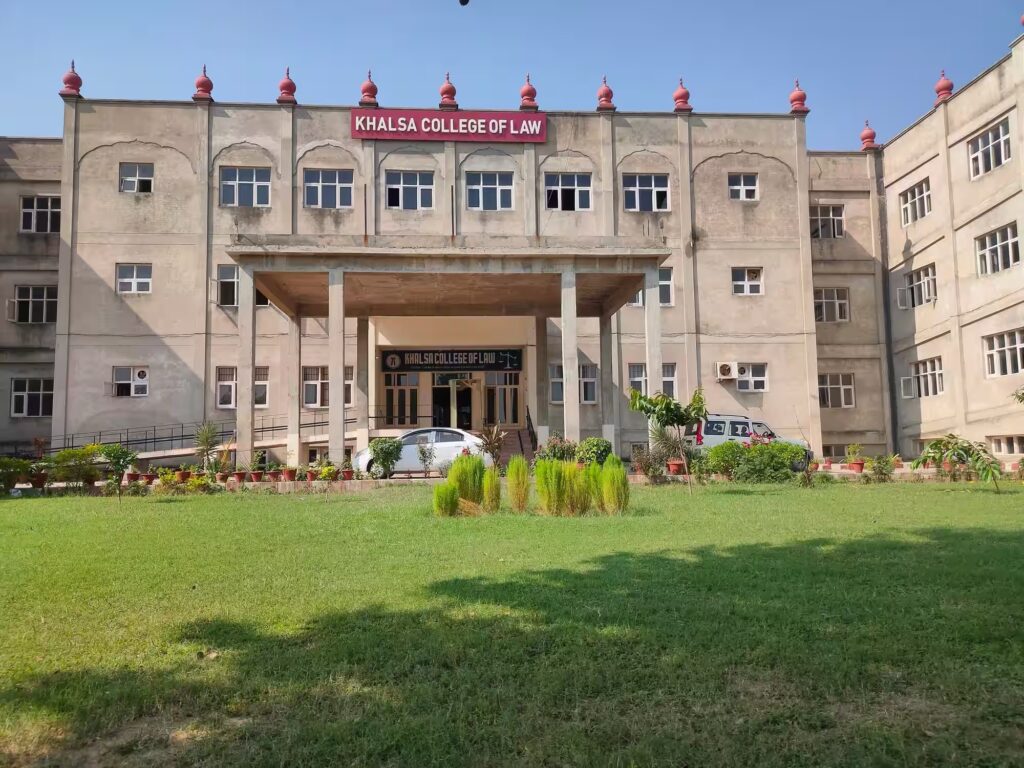
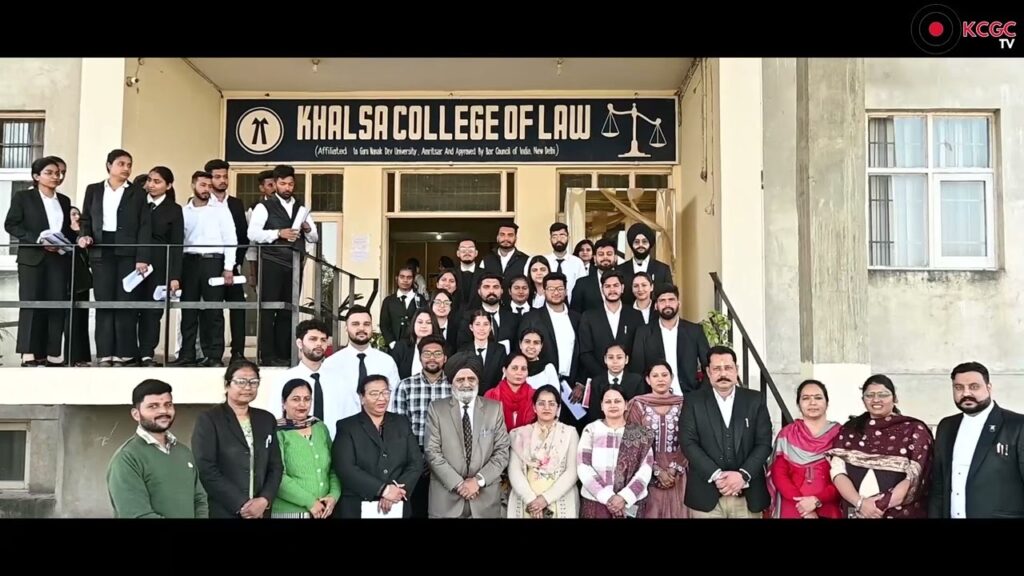
Khalsa College of Law, located in Amritsar, Punjab, is a reputed private law institution operating under the historic Khalsa College Charitable Society. The college is affiliated with Guru Nanak Dev University (GNDU), a NAAC A++ accredited public university.
The institution offers legal education through programs affiliated with Guru Nanak Dev University and operates within the regulatory framework prescribed by the Bar Council of India. The college focuses on academic learning, legal studies, and professional skill development for aspiring law students. The college operates within the legal education framework prescribed by the University Grants Commission (UGC), Guru Nanak Dev University, and the Bar Council of India.
Recognition & Accreditation
- GNDU ranked in NIRF 2025 (University Category) – Official NIRF Source
- Affiliated to UGC-recognized university – Guru Nanak Dev University
- Law programs are offered under the regulatory framework prescribed by the Bar Council of India through affiliation with Guru Nanak Dev University.
- GNDU established under Guru Nanak Dev University Act, 1969 (Punjab Act No. 21 of 1969)
University Snapshot
Location
Amritsar, Punjab, India
NIRF Rank (Law)
Refer GNDU – University Category
Governing Body
Khalsa College Charitable Society, Amritsar
NAAC Grade
A++ (GNDU)
Type
Private Affiliated College
Intake Months
July–August
Law Programs Offered by the University
Below are the major law programs offered, along with key eligibility, duration, and admission details.
LL.B (3 Years)
Duration: 3 Years
Eligibility: Graduation in any discipline
Entrance: Not Required
Approx Fees: As prescribed by Guru Nanak Dev University and Punjab Government regulations
BA LL.B (Hons.) – 5 Year
Duration: 5 Years (Integrated)
Eligibility: 10+2 with required percentage
Entrance: Not Required
Approx Fees: As prescribed by Guru Nanak Dev University and Punjab Government regulations
B.Com LL.B (Hons.) – 5 Year
Duration: 5 Years (Integrated)
Eligibility: 10+2 with required percentage
Entrance: Not Required
Approx Fees: As prescribed by Guru Nanak Dev University and Punjab Government regulations
Note: Candidates should verify the latest fee details from the official admission notification.
Is Khalsa College of Law Amritsar a Good Law College?
Khalsa College of Law Amritsar is a law institution affiliated with Guru Nanak Dev University and offers undergraduate legal education through BA LL.B., B.Com LL.B., and LL.B. programs. Students seeking legal education in Punjab may consider the institution based on their academic goals, location preferences, and admission requirements.
Who Should Choose This University ?
- Students seeking an affordable law degree from a recognised institution affiliated with Guru Nanak Dev University
- Aspirants targeting judiciary exams and civil services
- Students interested in constitutional law, criminal law, and public policy
- Students seeking legal education within the historic Khalsa educational network.
Documents Required for Law Admission (2026) – Complete Official Checklist
Students seeking admission to Khalsa College of Law, Amritsar must submit certain academic and identity documents during the admission process. These documents are required as per the Bar Council of India legal education rules and the admission guidelines of Guru Nanak Dev University.
For Undergraduate (5-Year) Applicants:
- Class 10 Certificate (Date of Birth proof)
- Class 12 Pass Certificate and Marksheet from a recognised board
- Category Certificate (SC/ST/OBC/EWS/PwD if applicable as per Government norms)
- Entrance Test Scorecard (if required under the university admission policy)
- Valid Photo ID (Aadhaar Card / Passport / Driving Licence)
For LLB (3-Year) Applicants:
- Class 10 Certificate (Date of Birth proof)
- Class 12 Certificate
- Graduation Degree & Final Marksheet from a recognised university
- Provisional Degree Certificate (if final degree is awaited)
- Category Certificate (SC/ST/OBC/EWS/PwD as applicable)
- Valid Government Photo Identity Proof
- Passport-size Photographs
Note: Applicants should verify the latest document requirements from the official admission notification issued by the affiliated university before submitting their application, as requirements may vary depending on the program, category, and admission year.
Students preparing for law entrance examinations should also explore the detailed resources available on CLAT Exam, Law Entrance Exams in India, and the Law College Directory on Lawsection.in.
How to Apply for Law Programs (Step-by-Step Admission Process 2026)
Admission to law programs at Khalsa College of Law, Amritsar is conducted according to the admission rules prescribed by Guru Nanak Dev University and the Bar Council of India. Candidates seeking admission to LL.B or other law programs must follow the structured application and counselling process described below.
Step-by-Step Format
Step 1 – Check Eligibility Criteria
Candidates must review the minimum academic qualifications required for admission. For LL.B admission, applicants must hold a recognised undergraduate degree and meet the eligibility criteria prescribed under the Bar Council of India Rules of Legal Education.
Step 2 – Register on the Official Admission Portal
Applicants must register through the official admission portal of Guru Nanak Dev University or the authorised college admission portal and create an applicant account.
Step 3 – Fill Application Form & Upload Documents
Candidates must provide academic details, upload required documents, and carefully verify all information before submitting the application form.
Step 4 – Pay Application Fee
Applicants must pay the prescribed application fee through the available online payment modes as mentioned in the admission notification.
Step 5 – Appear for Entrance Test (If Applicable)
Admission requirements may vary from year to year. Candidates should follow the latest admission notification issued by the college and affiliated university.
Step 6 – Merit List & Counselling
After the application process closes, the university or college prepares a merit list based on academic performance, entrance scores (if applicable), and reservation norms.
Step 7 – Final Admission Confirmation
Candidates who receive seat allotment must complete document verification and pay the required admission fee to confirm their admission.
International Student Note
International applicants must additionally comply with visa requirements, academic equivalency certification, and regulatory guidelines issued by the Government of India and the affiliated university before final admission.
Law Colleges in Amritsar – Legal Education Options
Amritsar is an important educational city in Punjab that offers several higher education institutions including law colleges affiliated with universities in the region. Students interested in pursuing legal education in Amritsar can explore institutions that offer LL.B and integrated law programs recognised by the Bar Council of India.
Khalsa College of Law is one of the institutions in Amritsar that provides legal education and prepares students for careers in litigation, judiciary services, corporate law, and legal consultancy.
Students searching for law colleges in Amritsar may also explore other law institutions across Punjab and India through the Lawsection.in Law College Directory. -> Explore more law colleges in India
How Many Law Colleges Are in Amritsar?
Amritsar hosts a few institutions offering legal education including colleges affiliated with Guru Nanak Dev University and other universities in Punjab. These institutions provide LL.B and related law programs recognised by the Bar Council of India.
Popular Law Colleges in Punjab
Punjab is home to several recognised law schools and legal education institutions offering undergraduate, postgraduate, and research-oriented legal programs. Students exploring legal education opportunities often compare institutions based on academic reputation, Bar Council of India approval status, university affiliation, faculty strength, research exposure, moot court culture, infrastructure, affordability, and career prospects.
While some institutions focus on national-level legal education and research, others emphasise practical legal training, judiciary preparation, litigation skills, and professional development. Before applying, students should carefully evaluate the strengths of different institutions according to their career goals.
Army Institute of Law (AIL), Mohali
Army Institute of Law is among the most recognised private law institutions in North India. The institute offers integrated law programs and postgraduate legal education while maintaining a strong focus on internships, moot court participation, academic excellence, and professional skill development.
Rajiv Gandhi National University of Law (RGNUL), Patiala
RGNUL is one of India’s leading National Law Universities and admits students primarily through the Common Law Admission Test (CLAT). The university is known for its academic rigor, legal research centres, residential campus, moot court activities, and strong presence in legal academia, litigation, public service, and higher legal studies.
University Institute of Legal Studies (UILS), Panjab University, Chandigarh
UILS is one of the most respected law schools in the Chandigarh region. The institute offers integrated law programs, LL.M., and doctoral research opportunities and is particularly known for legal research, advocacy training, judiciary-oriented preparation, and student participation in national competitions.
Department of Laws, Panjab University, Chandigarh
The Department of Laws is among the oldest centres of legal education in North India. It offers LL.B., LL.M., and doctoral programs and continues to attract students seeking traditional legal education supported by experienced faculty and a strong academic environment.
Punjab School of Law, Punjabi University, Patiala
Punjab School of Law offers undergraduate, postgraduate, and research-level legal education under Punjabi University. The institution is known for its focus on legal scholarship, constitutional studies, advocacy training, and public law research.
Chandigarh University – Institute of Legal Studies
The Institute of Legal Studies at Chandigarh University offers integrated law programs, LL.B., LL.M., and doctoral studies. The university places emphasis on experiential learning, legal aid activities, industry interaction, internships, and practical legal education.
Khalsa College of Law, Amritsar
Khalsa College of Law is affiliated with Guru Nanak Dev University and offers legal education through undergraduate law programs. Students may consider the institution based on their academic preferences, location, and admission requirements.
School of Legal Studies, Lovely Professional University (LPU)
Lovely Professional University offers integrated law programs, LL.B., LL.M., and doctoral studies. The School of Legal Studies is known for its modern infrastructure, industry engagement, moot court activities, and multidisciplinary learning environment.
Compare Before You Apply
Before selecting a law school, students should carefully compare admission requirements, entrance examinations, fee structure, university recognition, Bar Council of India approval status, faculty expertise, placement support, research opportunities, campus facilities, and long-term career prospects. Evaluating multiple institutions can help applicants make a more informed decision aligned with their academic and professional goals.
Frequently Asked Questions (FAQs)
Q.1- Are the law programs offered at Khalsa College of Law governed by Bar Council of India regulations?
Yes. The law programs are offered within the regulatory framework prescribed by the Bar Council of India through the college’s affiliation with Guru Nanak Dev University, making graduates eligible to pursue legal practice in India subject to applicable regulations.
Q.2- How can I get admission to Khalsa College of Law in 2026?
Admission is generally conducted according to the eligibility and admission guidelines prescribed by Guru Nanak Dev University. Candidates must satisfy the academic requirements for the respective law program and complete the admission process notified by the university or college.
Q.3- Is CLAT required for admission to Khalsa College of Law?
No. Admission to the law programs offered by Khalsa College of Law is generally not based on CLAT. Candidates should refer to the latest admission notification issued by Guru Nanak Dev University for the applicable admission criteria.
Q.4- What career opportunities are available after graduating from Khalsa College of Law?
Graduates may pursue careers in litigation, judiciary examinations, corporate legal departments, legal consultancy, compliance, public service, legal research, and higher legal studies such as LL.M. programs in India or abroad.
Q.5- Is the law degree from Khalsa College of Law valid for legal practice in India?
Yes. After completing the prescribed law degree, graduates may enroll with the appropriate State Bar Council and become eligible to practice law in accordance with the prevailing Bar Council of India regulations, including any examination requirements applicable at the time.
Career and Higher Study Opportunities After Law Graduation
Students graduating from Khalsa College of Law can pursue diverse legal career paths including litigation, corporate law practice, judiciary examinations, and legal advisory roles. Many law graduates also pursue higher studies such as LL.M in India or abroad to specialise in advanced legal fields.
Study LLM Abroad: Top Law Universities in UK, USA & Canada
Planning to pursue an LLM abroad? Explore carefully curated and verified guides to top-ranked law universities in the United Kingdom, United States, and Canada. These country-wise pages provide structured information on admission requirements, eligibility criteria, tuition fees, intakes, scholarships, and career prospects — based on official university sources and updated as of 2026. Compare destinations confidently and choose the best pathway for your global legal career.
LLM In UK

Find the best Law Universities in United Kingdom.
LLM In USA

Explore Top-ranked Law Universities in the USA.
LLM in Canada
Canada’s Top-ranked Law Universities listed here.
This information is curated by Lawsection’s editorial team as part of our Study Law Abroad and Global Law College Directory initiatives.
Information compiled from the official website of Khalsa College of Law, publicly available university resources, and regulatory information available at the time of publication. Applicants should verify the latest admission, eligibility, fee, and program details from the official college and university notifications before applying.
Address





Cardiff Metropolitan University, UK – Law Courses, Fees, Eligibility, Admissions 2026
- Government
- LLB (3 Years), LLM Abroad, Juris Doctor (JD), PhD in Law




Wrexham University Law Courses in UK (2026): Fees, Entry Requirements, Admissions & Student Guide
- Government
- LLB (3 Years), LLM Abroad, Juris Doctor (JD), PhD in Law



Cardiff University, UK – Law Courses, Fees, Admission Requirements & Study Opportunities (2026)
- Government
- LLB (3 Years), LLM Abroad, Juris Doctor (JD), PhD in Law


Swansea University Law School (UK): Courses, Fees, Eligibility, Admissions, Rankings & Study Guide 2026
- Government
- LLB (3 Years), LLM Abroad, Juris Doctor (JD), PhD in Law


Bangor University, UK – Law Courses, Fees, Eligibility, Admissions & Bangor Law School Guide (2026)
- Government
- LLB (3 Years), LLM Abroad, Juris Doctor (JD), PhD in Law



Queensland University of Technology Law School Australia: Courses, Fees, Eligibility, Admissions & Career Opportunities 2026
- Government
- LLB (3 Years), LLM Abroad, Juris Doctor (JD), Doctor of Juridicial Science (S.J.D), PhD in Law



Griffith University, Australia – Complete Guide to Law Programs, Fees, Eligibility, Campuses & Admissions (2026)
- Government
- LLB (3 Years), LLM Abroad, Juris Doctor (JD), Doctor of Juridicial Science (S.J.D), PhD in Law
