
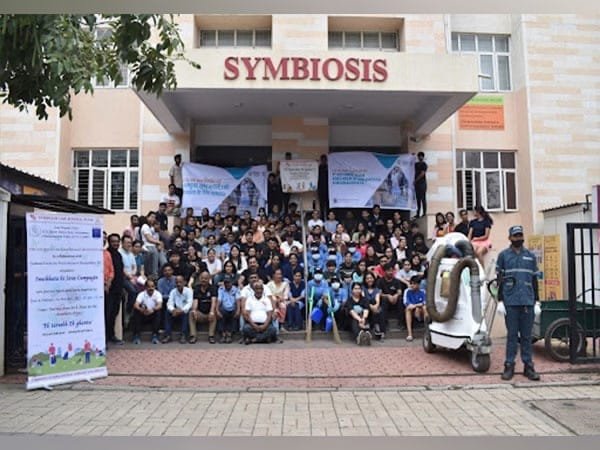
1. Overview — What is Symbiosis Law School (SLS)?
Symbiosis Law School (SLS) is the law-education arm of Symbiosis International (Deemed University). Founded to deliver modern, practice-oriented legal education, SLS has developed into a multi-campus network that offers undergraduate (B.A. LL.B., B.B.A. LL.B., B.Com LL.B), postgraduate (LL.M.) and research programmes, along with rich co-curricular opportunities like moot courts, legal aid clinics, research centers and international exchange programmes. SLS emphasizes an interdisciplinary curriculum, industry linkages, and experiential learning to prepare graduates for legal practice, policy, and corporate roles.
Why students choose Symbiosis: reputed faculty, strong alumni network, campus life, placement support and focused centres (e.g., corporate law, public policy, tech & innovation law) that produce well-rounded graduates ready for legal careers.
2. All Branches (Campuses) of Symbiosis Law School — Detailed Information
Symbiosis Law School is multi-campus. The main and widely known campuses as of 2025–26 are Pune, Noida, Hyderabad and Nagpur. Each campus shares Symbiosis’ learning ethos but also has distinguishing strengths and local industry links.
Symbiosis Law School — Pune (SLS Pune)
SLS Pune is the flagship campus (established 1977) and enjoys the longest legacy. It offers a wide portfolio of programmes, active research centres, specialization streams, and numerous moots, legal clinics and student bodies. Pune campus often features prominently in national rankings and maintains strong placement records and academic collaborations. The campus is known for research centres in public law, corporate law and technology & innovation law. If you want the classical Symbiosis law experience (legacy, research, national exposure), Pune is the primary choice.
Symbiosis Law School — Noida (SLS Noida)
Located in the National Capital Region, SLS Noida leverages proximity to courts, law firms, think tanks and corporate hubs. It focuses on internships, moots and placements within Delhi-NCR and offers industry exposure in corporate and litigation practice. Noida campus is ideal for aspirants looking for access to the capital’s legal ecosystem.
Symbiosis Law School — Hyderabad (SLS Hyderabad)
SLS Hyderabad is situated near the educational/IT zones of Hyderabad. It has modern infrastructure and bridges law education with technology, policy research and emerging domains such as cyberlaw and intellectual property. The campus emphasizes value-added courses, seminars and collaborations that link law with regional industry clusters (IT, startups, aviation services). Hyderabad appeals to aspirants interested in tech-law intersections.
Symbiosis Law School — Nagpur (SLS Nagpur)
A relatively newer campus, SLS Nagpur provides a modern campus experience with a growing focus on integrated learning, legal aid, and regional engagement. Nagpur’s strategic geographic location in central India helps attract students from central & eastern India and supports varied practical exposure. The campus is building its research and placement profile steadily.
Note: Program offerings, seat matrix and specializations can vary slightly between campuses. Always check the campus brochure or the official Symbiosis/SLAT pages for exact course lists, fees and seats for the year of admission.
3. Symbiosis Law Admission Test (SLAT) — What You Must Know (2026)
What is SLAT?
SLAT (Symbiosis Law Admission Test) is the common online entrance test for undergraduate law admissions to Symbiosis Law Schools. It assesses aptitude across reasoning, reading, analytical and general awareness skills rather than prior law knowledge. SLAT is followed by institute-level shortlisting and further rounds (Writing Ability Test / Personal Interview) for final admission.
SLAT 2026 — Key Structure & Features (official)
Mode: Computer-Based Test (CBT) across multiple cities.
Format: 60 questions, 60 marks; 5 sections — Logical Reasoning, Legal Reasoning, Analytical Reasoning, Reading Comprehension, General Knowledge (each ~12 questions / 12 marks).
Duration: 60 minutes (approx. 1 minute per question).
Negative Marking: No negative marking in SLAT 2026 (attempts are encouraged but logical guessing is better than random guessing).
Two Attempts: SLAT provides two test dates (Test-1 and Test-2); the higher score of the two is considered for admissions.
SLAT 2026 — Important Dates (high-level)
Registration, admit card and test dates are announced on the official SLAT portal. For the 2026 admission cycle the registration window opened in August 2025 and the two test windows were scheduled in December 2025; final result and PI/WAT timelines followed in January 2026. Always verify the exact calendar on the official site before applying.
4. SLAT 2026 — Syllabus (What to Prepare)
SLAT’s syllabus is aptitude-based and focuses on skill-sets:
Logical Reasoning: Series, arguments, patterns, deductions.
Legal Reasoning: Short fact-based legal scenarios where you must extract the rule and apply it. Prior legal study is NOT required—focus on reasoning.
Analytical Reasoning: Puzzles, data interpretation, seating/ordering, pattern analysis.
Reading Comprehension: Passage-based questions testing inference, tone, purpose and summary skills.
General Knowledge / Current Affairs: Static and dynamic GK — national/international news, awards, important legal/policy developments.
Because each section is equally weighted, maintain a balanced preparation plan: reading speed + comprehension; regular logic/analytical drills; and a concise, updated current affairs notebook.
5. Eligibility for Symbiosis Law Schools via SLAT (2026)
General eligibility highlights (confirm with official notification):
Candidates should have passed 10+2 (or equivalent) from a recognized board; final-year students are typically allowed to apply subject to passing before admission.
Minimum aggregate percentage requirements are specified (commonly around 45% for General category and lower for reserved categories—confirm the latest notification).
There is no upper age limit in most cases.
Separate programme registration and payment steps are usually required after SLAT registration. Always see the official eligibility page for details and supporting documents required.
6. SLAT Results, Shortlisting & Admission Process
After the SLAT test(s), results / scorecards are published on the official portal. Shortlisted candidates for each Symbiosis institute are called for the institute-level Writing Ability Test (WAT) and Personal Interview (PI) (or combined selection process), and final merit lists are prepared by the institutes taking into account SLAT scores + WAT/PI performance + other criteria as specified.
If you take both SLAT attempts, remember the best score is considered for shortlisting — use the second attempt to improve if needed.
7. How to Apply for SLAT (Step-by-Step)
Register on the official SLAT portal (create account using email/phone). slat-test.org
Complete application form: personal details, academic details (Class 10 & 12), preferences of campuses/programmes. slat-test.org
Upload documents: recent passport photo, scanned signature and (if required) category certificates.
Pay test fee and also complete programme registration payments for each Symbiosis institute you apply to (these can be separate payments). Keep receipts. slat-test.org
Download admit card when released; appear at the test centre (CBT) or attend the online scheduled slot as per admit card instructions.
After result: follow the WAT/PI schedules for shortlisted institutes and complete document verification and fee payment for admissions.
8. Pro Tips — Preparing for Symbiosis Law & SLAT
Balanced preparation: Each SLAT section carries equal marks — avoid over-focusing on one area at the expense of others.
Reading habit: Cultivate daily reading of editorials, legal news and analytical pieces to improve RC and GK simultaneously.
Practice online mocks: Because SLAT is CBT, take online mocks to build comfort with computer format and pacing.
Legal reasoning drills: Practice rule extraction from short scenarios—draw “rule → facts → inference” flowcharts.
Analytical puzzles: Solve seating, arrangement, direction, and DI puzzles — speed and accuracy win marks.
WAT & PI prep: If you clear SLAT shortlisting, be ready to write concise, structured essays and answer questions on motivation, background and current affairs. Practice mock interviews.
Use campus brochures: Each SLS campus releases program brochures — read them to pick campus-specific electives, clinics and placement specialities.
9. FAQs (Quick Answers)
Is SLAT the only way to get into Symbiosis Law Schools? For the UG programmes under SIU, SLAT is the common test; institutes may also have institute-level processes after shortlisting.
Are there two SLAT attempts? Yes — Test-1 and Test-2 are offered; the better score counts.
Is there negative marking? SLAT 2026 does not use negative marking. Confirm in the official instruction sheet at time of exam.
10. Final Advice — Choosing the Right SLS Campus
When you choose between Pune, Noida, Hyderabad or Nagpur, weigh these factors: curriculum specialization, location (placement market), campus culture, internship opportunities, research centers, and faculty interests. Visit campus brochures and alumni testimonials; if possible, attend open days or webinars hosted by the institutes to get a real sense of fit.
Subscribe to our newsletter
Enjoy exclusive special deals available only to our subscribers.
